Understand your options
A less cluttered way to organize medication information
A practical guide to keeping a clear medicine list, asking better questions, and storing papers and labels so routine medication information is easier to find.
4-minute read · Published Oct 26, 2026 · Sources checked Nov 12, 2026

The essential idea
A simple medication system can make it easier to find names, directions, and storage details when you need them. The FDA recommends asking questions, keeping a medicine list, following directions, and safely storing or discarding medicines. A small, consistent setup for labels, refill notes, and paperwork can reduce clutter without adding complexity.
Why a medication paper trail matters
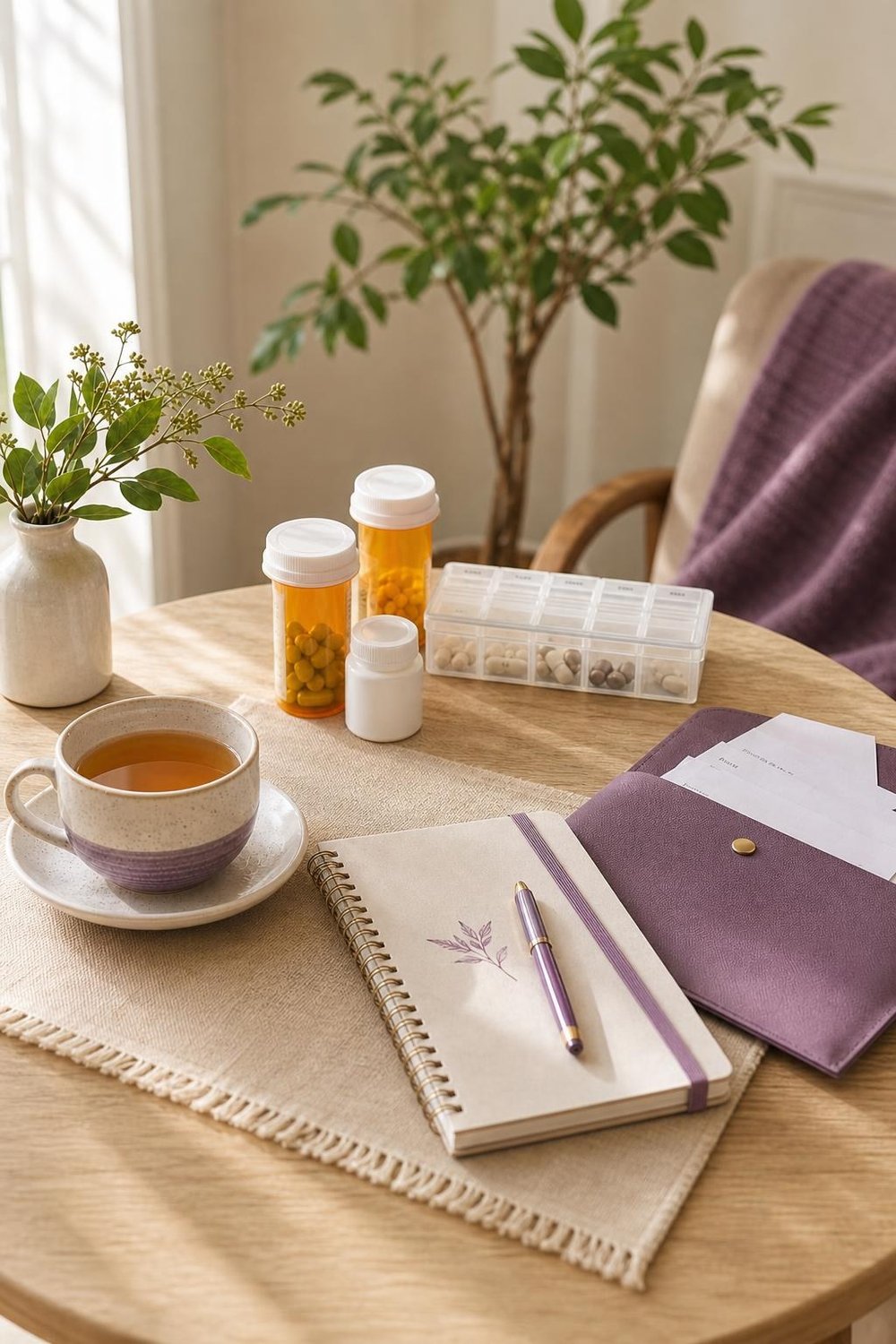
Medication information gets scattered quickly: pharmacy labels, after-visit summaries, refill notices, and over-the-counter reminders often end up in different places. A low-clutter system gives you one place to check the basics before you need to call a clinic or pharmacy.
The goal is not to collect every scrap of paper. It is to keep the facts that help you identify each medicine, understand the label, and notice when something has changed.
Build one simple place for names and labels
The FDA says to write down important facts about each medicine you take, including prescription medicines and over-the-counter items like aspirin and cold medicine. A useful list can include the medicine name, active ingredient, what it is for, and how it is labeled to be taken.
If you prefer paper, keep the list with you. If you prefer a notes app, use one note for the full list and keep it updated after every change. The point is consistency: one list, one version, one place to check first.
Use questions to fill in the missing details
A clean medication list is stronger when it includes the answers to practical questions. The FDA suggests asking what the medicine is called, what the active ingredient is, what it is for, what it looks like, when it expires, and whether there are special warnings or side effects to watch for.
You can also ask whether any foods or other medicines should be avoided. Turning those questions into a standard checklist makes it easier to update your records whenever a prescription changes.
Store papers and medicines in ways that protect both
MedlinePlus says heat, air, light, and moisture may damage medicines, and that bathroom storage can be a problem because of shower and sink moisture. For that reason, a dresser drawer, cabinet away from the stove or sink, shelf, or closet is often a better place to keep both medicines and the papers tied to them.
Keep medicines in their original containers, and remove the cotton ball from the bottle if there is one. For paperwork, use a single envelope, folder, or box near the medicines so the label and list stay together without becoming a pile.
Refresh, discard, and keep the system tidy
The FDA and MedlinePlus both emphasize checking expiration dates and getting rid of unused or out-of-date medicines safely. A tidy paper system should do the same: remove old labels, cross out discontinued items on your list, and discard anything that no longer matches what you actually use.
You can also ask a pharmacist how to dispose of medicines or whether a take-back program is available. If you keep empty bottles for reference, scratch off personal information before throwing them away.
Common questions
What should a basic medicine list include?
The FDA says to list each prescription medicine and include vitamins and over-the-counter medicines like aspirin and cold medicine. It also recommends keeping the list with you and showing it to your doctor, nurse, and pharmacist.
Where is the safest place to store medicine papers and containers?
MedlinePlus says medicines should be kept in a cool, dry place, such as a dresser drawer, a cabinet away from the stove or sink, a shelf, or a closet. It also says to keep medicines in their original container.
How do I know when to throw something out?
The FDA advises checking the expiration date and not using medicine after it has expired. MedlinePlus adds that damaged medicines, or pills that have changed color, texture, or smell, should not be taken.
Continue exploring
Explore current semaglutide options
See the current product listings, source links and verified pricing in the live comparison.
View semaglutide pricing ↗Sources & further reading
MedlinePlus: Storing your medicines ↗
Prepared with AI assistance and automated source review. This article has not been reviewed by a clinician.
Educational information, not medical advice
This article is for general educational purposes only and is not medical advice, diagnosis or treatment. RightFit Health is an informational publisher, not a healthcare provider or pharmacy. Always consult your doctor or another qualified healthcare professional about medical questions and before starting, stopping or changing any medication. Never disregard professional medical advice or delay seeking it because of something you read here.
Save this article for later