Recipes & everyday food
Chickpea and Tomato Soup with Herbs
A simple pantry soup built from canned chickpeas, tomatoes, onion, broth, and herbs, with food-safety and allergy notes from FDA guidance.
4-minute read · Published Oct 31, 2026 · Sources checked Nov 12, 2026

The essential idea
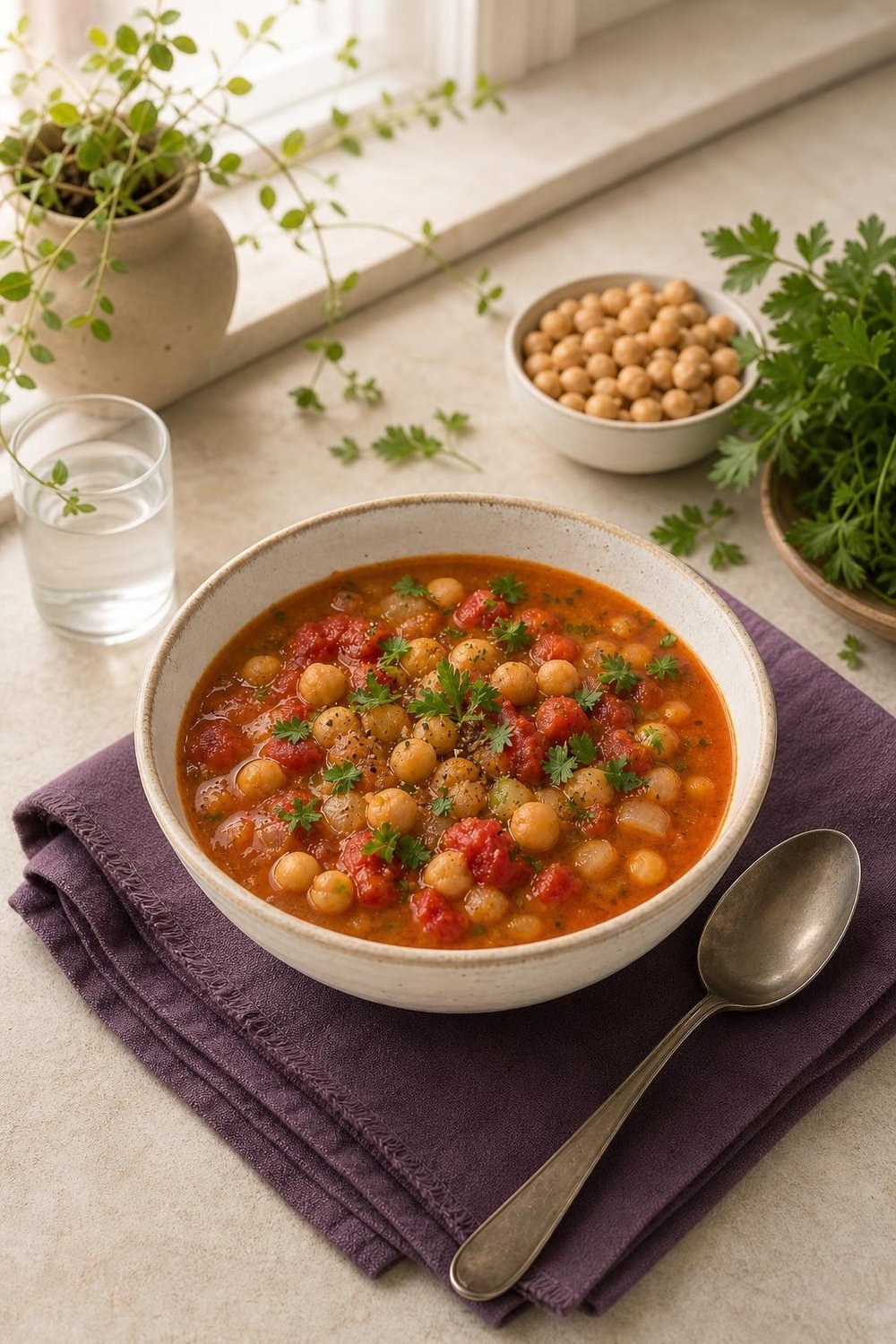
This chickpea and tomato soup leans on pantry staples and a short simmer for a satisfying, brothy bowl. The recipe card uses canned chickpeas, canned tomatoes, onion, broth, garlic, and herbs, with clear timing, storage, and substitution notes. FDA guidance also reminds cooks to clean can lids before opening, chill leftovers promptly, and read labels carefully for allergens.
The recipe
Chickpea and Tomato Soup with Herbs
Makes 4 servings · Prep 10 min · Cook 25 min · Total 35 min
Ingredients
- 2 tablespoons olive oil
- 1 medium yellow onion, diced
- 3 cloves garlic, minced
- 2 (15-ounce) cans chickpeas, drained and rinsed
- 1 (28-ounce) can crushed tomatoes
- 4 cups vegetable broth
- 1 teaspoon dried oregano
- 1/2 teaspoon dried thyme
- 1 bay leaf
- 1 teaspoon kosher salt, plus more to taste
- 1/4 teaspoon black pepper
- 2 tablespoons chopped fresh parsley, plus more for serving
- 1 tablespoon lemon juice
- 1 pinch red pepper flakes (optional, for serving)
Method
- Heat the olive oil in a medium pot over medium heat.
- Add the diced onion and cook, stirring often, until softened, about 5 minutes.
- Stir in the garlic and cook for 30 seconds.
- Add the chickpeas, crushed tomatoes, broth, oregano, thyme, bay leaf, salt, and black pepper.
- Bring the soup to a gentle boil, then reduce the heat and simmer uncovered for 20 minutes.
- Remove the bay leaf. Taste and adjust salt, pepper, and lemon juice.
- Stir in the parsley just before serving.
- Ladle into bowls and finish with extra parsley or red pepper flakes if desired.
Allergens & substitutions
None of the listed ingredients are major allergens by default, but broth and canned products can vary by brand and should be checked on the label.
- Use chicken broth instead of vegetable broth if preferred.
- Mash about 1 cup of the chickpeas for a thicker soup.
- Swap canned diced tomatoes for crushed tomatoes for a chunkier texture.
- Use fresh thyme instead of dried thyme if you have it; add a little more near the end.
Storage
Refrigerate leftovers within 2 hours of cooking, or within 1 hour if the temperature outside is above 90° F. Store in shallow containers and reheat only the portion you plan to eat.
An original recipe idea, not a prescribed meal plan. Preparation times are estimates; individual dietary needs vary.
What this soup is
This is a straightforward pantry soup with a tomato-forward broth, tender chickpeas, and aromatics simmered with herbs. It works as a light main dish or a starter, and it is designed to be clear, flexible, and easy to portion.
The flavor is built in layers: onion and garlic for the base, tomatoes for body, broth for savoriness, and herbs for a fresh finish. A little olive oil helps the aromatics soften before the liquids go in.
Ingredients and smart substitutions
The recipe uses canned chickpeas, canned tomatoes, onion, broth, garlic, dried oregano, dried thyme, and parsley. Those ingredients create a complete soup without requiring extra pantry work.
If you want a thicker texture, mash a small portion of the chickpeas before adding them back to the pot. If you want a looser soup, add a bit more broth near the end. You can swap vegetable broth for chicken broth if that fits your needs.
For garnish, keep it simple with chopped parsley or a drizzle of olive oil. If you like more heat, add red pepper flakes at the table instead of building spice into the whole pot.
Food-safety basics for this recipe
FDA advises washing hands and surfaces often, and it specifically says to clean can lids before opening canned goods. This matters here because the recipe starts with multiple canned ingredients and a quick prep process.
Leftovers should be refrigerated promptly. FDA says to refrigerate or freeze perishables within 2 hours of cooking, or within 1 hour if the temperature outside is above 90° F.
FDA also notes that color and texture are not reliable indicators of safety. For this soup, that means relying on careful handling and storage rather than appearance alone.
Allergen awareness and label reading
This soup is naturally free of several common ingredients, but the broth, canned tomatoes, and garnishes can still vary by brand. FDA says labels must clearly identify major food allergens in regulated foods, and sesame is now a major allergen as well.
When you shop, read the ingredient list and any contains statement carefully. FDA says allergen names may appear in parentheses after an ingredient or in a separate contains statement.
If someone eating the soup has a known food allergy, use the label as your first screen and avoid any ingredient that is unclear or known to be a problem for that person.
How to serve and store it
Serve the soup hot with crusty bread, rice, or a simple salad if you want a fuller meal. It also holds well because the chickpeas keep the texture from becoming too thin after simmering.
For storage, cool the soup quickly and refrigerate in shallow containers. This helps the leftovers chill faster and makes reheating easier later.
The flavor often deepens after a day in the refrigerator, so this is a good make-ahead dish for lunch or a second dinner. Reheat only what you need, and keep the rest cold until serving.
Common questions
Can I use dried chickpeas instead of canned chickpeas?
Yes, but the recipe as written is built around canned chickpeas for speed and consistency. If you switch to dried chickpeas, cook them fully before making the soup so they are tender and ready to add.
What kind of broth works best?
Vegetable broth keeps the recipe fully plant-based, while chicken broth gives the soup a different savory base. Either works in this formula, as long as you use a broth you enjoy drinking on its own.
How should I check the can labels for allergies?
Look for the ingredient list and any contains statement. FDA says major allergens must be clearly identified on regulated food labels, and sesame must also be declared as a major allergen.
Continue exploring
Explore current GLP-1 options
Exploring GLP-1 care separately? Compare current semaglutide listings and discuss treatment questions with a qualified clinician. This recipe is not a treatment recommendation.
View semaglutide pricing ↗Sources & further reading
Prepared with AI assistance and automated source review. This article has not been reviewed by a clinician.
Educational information, not medical advice
This article is for general educational purposes only and is not medical advice, diagnosis or treatment. RightFit Health is an informational publisher, not a healthcare provider or pharmacy. Always consult your doctor or another qualified healthcare professional about medical questions and before starting, stopping or changing any medication. Never disregard professional medical advice or delay seeking it because of something you read here.
Save this article for later