Recipes & everyday food
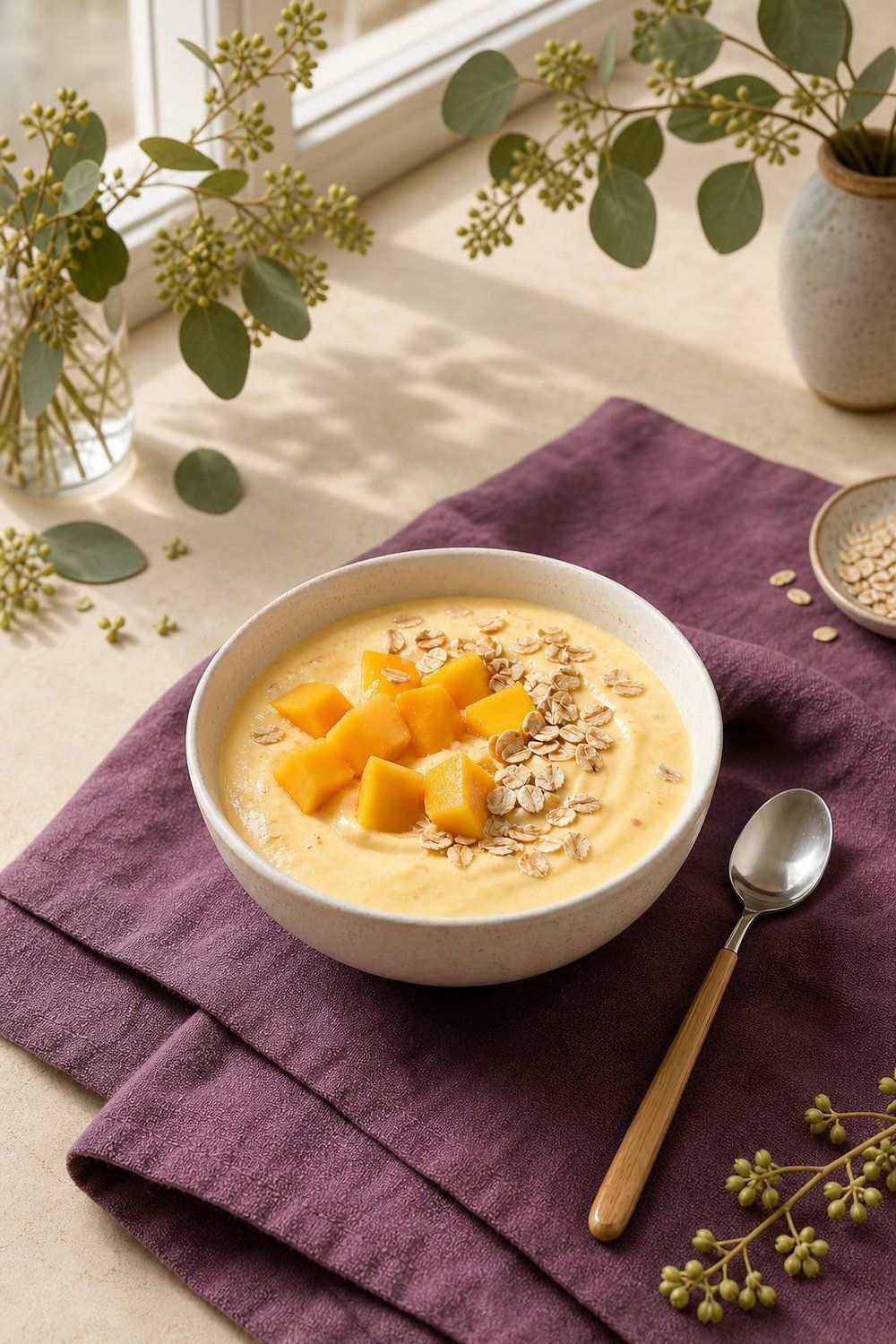
Mango Yogurt Smoothie Bowl with Oats
A bright mango yogurt smoothie bowl with oats, plus a soy-milk swap and FDA-based storage and allergy notes.
4-minute read · Published Oct 28, 2026 · Sources checked Nov 12, 2026

The essential idea
This mango yogurt smoothie bowl uses ripe mango, plain yogurt, milk and oats. Oats add body and yogurt adds tang. Blend it thinner for a drink or keep it thicker for a bowl. A dairy-free variation requires replacing both dairy ingredients and checking the labels of every substitute.
The recipe
Mango Yogurt Smoothie Bowl with Oats
Makes 2 servings · Prep 10 min · Cook 0 min · Total 10 min
Ingredients
- 2 cups peeled, diced ripe mango, plus extra for topping
- 1 cup plain yogurt
- 3/4 cup milk
- 1/2 cup rolled oats
- 1 tablespoon honey, optional
- 1 cup ice, optional for a thicker, colder smoothie bowl
Method
- If you want the smoothest texture, pulse the oats in a blender first for 10 to 15 seconds.
- Add the mango, plain yogurt, milk, and honey if using. Add the ice if you want a colder, thicker blend.
- Blend until smooth, stopping once or twice to scrape down the sides. If the mixture is too thick, blend in a little more milk or oat milk.
- Taste and adjust. Add a bit more mango for sweetness or a splash more milk for a looser texture.
- Pour into 2 bowls or glasses. Top with a few mango cubes and a light sprinkle of oats if desired.
- Serve immediately, or refrigerate leftovers in a covered container within the FDA timing guidance.
Allergens & substitutions
Milk May contain soy if soy milk is used
- For a dairy-free version, replace both the milk and yogurt with alternatives labeled dairy-free. Check the complete ingredient lists for your allergens; lactose-free dairy milk or yogurt still contains milk proteins.
- Soy, oat and other plant-based products differ in ingredients and cross-contact labeling. Select products that meet the eater’s needs; a plant name alone is not an allergen-free guarantee.
- Adjust the chosen milk alternative a little at a time for the texture you prefer.
Storage
Refrigerate leftovers in a covered container within 2 hours, or within 1 hour if the room is above 90°F. Stir before serving, and thin with a splash of milk or oat milk if the mixture thickens in the fridge.
An original recipe idea, not a prescribed meal plan. Preparation times are estimates; individual dietary needs vary.
What this dish is
This is a chilled fruit-and-yogurt breakfast or snack that leans on mango for sweetness and oats for thickness. The base is simple enough to make with pantry staples, but the result feels more composed when the mango is ripe and the yogurt is plain rather than flavored.
Because the ingredients are blended together, the finished texture depends on the liquid you choose. More milk gives you a drinkable smoothie; less liquid makes a thicker bowl for a spoon. That makes the recipe easy to adapt without changing the flavor profile.
Ingredient framework
Use ripe mango for the main flavor, plain yogurt for tang, and rolled oats for structure. A small amount of honey is optional, but the mango should provide most of the sweetness. Ice is optional if you want a colder, thicker blend.
Use the milk and yogurt listed for the base recipe. For a dairy-free variation, replace both with alternatives labeled dairy-free and check every ingredient for the eater’s allergens. Add extra liquid gradually to adjust the texture.
How to make it
Blend the oats first if you want the smoothest texture, then add mango, yogurt, milk, and any sweetener. Start with less liquid, blend, and pause to scrape the sides so the oats distribute evenly. Add more milk only until the texture reaches your preference.
Pour the mixture into a chilled bowl or glass and top it with a few mango cubes if you like a little contrast. The recipe is intentionally flexible: it should taste bright and creamy, not overly sweet or heavy.
Food safety and storage
FDA advises washing hands and surfaces often, and refrigerating perishable foods promptly. If you make this ahead, put leftovers into a covered container and refrigerate them within 2 hours; if the room is above 90°F, refrigerate within 1 hour. The texture will thicken in the fridge, so you may want to stir in a splash of milk before serving.
Because yogurt is a dairy ingredient, this recipe is best handled like other perishable foods. If you are serving people with allergies, read labels carefully and keep separate utensils and prep surfaces when needed.
Allergen notes and serving ideas
This recipe contains milk if made with dairy yogurt and dairy milk. It may also contain soy if you choose soy milk as the swap. Oats are not one of FDA’s major food allergens, but packaged oats can still vary in how they are processed, so label reading matters when allergies are a concern.
Serve the smoothie bowl plain, or top it with extra mango cubes, a sprinkle of oats, or a spoonful of yogurt. Keep toppings simple so the mango flavor stays in front.
Common questions
Can I make this without dairy milk?
You can replace the dairy milk with a suitable plant-based alternative. To make the whole dish dairy-free, you must also replace the dairy yogurt. Check both labels and any toppings for milk and other allergens.
How long can leftovers sit out?
FDA says to refrigerate perishables within 2 hours, or within 1 hour if the temperature is above 90°F. For this smoothie, that means chilling leftovers promptly rather than leaving them on the counter.
What should I check if someone has a food allergy?
Read labels every time and avoid ingredients that are known allergens for that person. FDA notes that major food allergens include milk and soybeans, and that labels must clearly identify allergen source names in regulated foods.
Continue exploring
Explore current GLP-1 options
Exploring GLP-1 care separately? Compare current semaglutide listings and discuss treatment questions with a qualified clinician. This recipe is not a treatment recommendation.
View semaglutide pricing ↗Sources & further reading
NIDDK: lactose intolerance and milk allergy ↗
Prepared with AI assistance and automated source review. This article has not been reviewed by a clinician.
Educational information, not medical advice
This article is for general educational purposes only and is not medical advice, diagnosis or treatment. RightFit Health is an informational publisher, not a healthcare provider or pharmacy. Always consult your doctor or another qualified healthcare professional about medical questions and before starting, stopping or changing any medication. Never disregard professional medical advice or delay seeking it because of something you read here.
Save this article for later